
In 2026, MED reviewers continue to make outstanding contributions to the peer review process. They demonstrated professional effort and enthusiasm in their reviews and provided comments that genuinely help the authors to enhance their work.
Hereby, we would like to highlight some of our outstanding reviewers, with a brief interview of their thoughts and insights as a reviewer. Allow us to express our heartfelt gratitude for their tremendous effort and valuable contributions to the scientific process.
Chirag Parjiea, University Hospital Erlangen, Germany
Sho Koyasu, Kyoto University Hospital, Japan
Chirag Parjiea
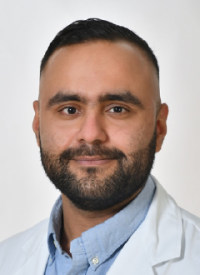
Dr. Chirag Parjiea is a physician based in Germany and is currently undergoing training in thoracic surgery at the Department of Thoracic Surgery, University Hospital Erlangen. His academic interests include complex thoracic and mediastinal infections, airway and tracheal pathology, perioperative critical care, and interdisciplinary surgical management of head and neck-related diseases with thoracic involvement. His recent research focuses on descending necrotising mediastinitis, mediastinal infections, and airway pathology, with several projects involving retrospective clinical analyses and case-based research. In parallel, he maintains a strong and growing interest in head and neck surgery, particularly at the interface between otorhinolaryngology, airway management, and thoracic surgery.
As a reviewer, Dr. Parjiea values methodological rigour, clinical relevance, and constructive scientific dialogue as fundamental pillars of academic medicine. Dr. Parjiea indicates that peer review is a cornerstone of scientific integrity. It serves not only as a quality control mechanism but also as a collaborative process that strengthens research through critical appraisal and constructive feedback. Thoughtful peer review helps ensure methodological soundness, ethical responsibility, and clinical relevance, ultimately safeguarding patient care and public trust in science. In addition, reviewers act as representatives of the scientific community, helping to contextualise new findings within existing knowledge and identifying areas where clarity or further exploration is needed. When done well, peer review is not an obstacle to publication but a catalyst for improvement and scientific dialogue.
On the responsibilities of reviewers, Dr. Parjiea emphasizes that reviewers should approach each manuscript with fairness, objectivity, and humility. It is important to distinguish between major methodological limitations and issues that can be addressed through revision. Reviews should be critical yet constructive, aiming to improve the manuscript rather than merely pointing out flaws. Clinical context is equally important: even technically sound studies must be assessed for relevance, applicability, and clarity of interpretation. Finally, reviewers should remain aware of potential biases, respect confidentiality, and remember that behind every submission is significant effort, often driven by a genuine desire to advance patient care and scientific understanding.
“Peer reviewing is often invisible work, but its impact is substantial. By dedicating time and expertise to reviewing manuscripts, reviewers actively shape the quality and direction of scientific progress. Even small, thoughtful comments can significantly improve a study and support fellow researchers. I would encourage reviewers to see this role not as an obligation, but as an opportunity to engage with emerging ideas, refine critical thinking, and contribute meaningfully to their field. Behind the scenes, reviewers play a vital role in maintaining the standards that science depends on,” says Dr. Parjiea.
(by Naomi Hu, Masaki Lo)
Sho Koyasu

Dr. Sho Koyasu is a board-certified diagnostic radiologist and nuclear medicine physician at Kyoto University Hospital, Japan. He earned his Ph.D. from Kyoto University in 2016, with his research focused on novel techniques for visualizing the tumor microenvironment in small animals. His primary research interest has since centered on tumor hypoxia. Currently, he allocates approximately 70% of his time to clinical practice and 30% to research. His expertise lies in biologically grounded clinical imaging diagnostics and nuclear medicine, with a focus on innovative strategies for tumor detection and evaluation through collaboration with thoracic surgeons, hematologists, and otolaryngology/head and neck surgeons. He also actively participates in research on rare genetic tumors and is passionate about mentoring young physicians in case reporting and academic writing. Connect with him on X.
Dr. Koyasu believes peer review is invaluable because it genuinely elevates the overall quality of academic papers. He shares that reviewers’ comments have repeatedly improved his own manuscripts significantly after submission. Occasionally, he encounters reviewers who are leading experts in his precise research niche; though rare, their feedback is highly specific, insightful, and often directs authors to key references that they have overlooked. He adds that most reviewers may not perfectly match one’s subspecialty, yet they can still comprehend the research thoroughly if it is clearly presented. Since such reviewers represent the majority of journal readers, their perspective is essential for ensuring that a study can be widely understood. In his view, without peer review, manuscripts would be comparable to, or even inferior to, unrefined AI-generated content lacking rigorous human evaluation.
According to Dr. Koyasu, reviewers should maintain a constructive mindset and focus on how each manuscript can be strengthened. The role of a reviewer is not only to identify flaws but also to offer practical suggestions to improve the work in all aspects. This covers major scientific rationality as well as minor details such as narrative clarity and typographical errors.
“Review requests always seem to come when we’re busy. There’s no pay, and it doesn’t always count much toward your career profile. In addition, we can’t accept every request either. But sometimes you would come across some really outstanding papers, and the reviewing process helps you see more clearly what makes a paper effective or not. That definitely helps when you write your own papers,” says Dr. Koyasu.
(by Lareina Lim, Masaki Lo)
